
Play Memory Match Online
All pairs matched
Flip two cards. Remember where they live.
Memory match—also called Concentration or Memory—is a solo pairing game. Every card starts face down. You turn two at a time: matching symbols stay up, mismatches flip back after a short pause. This page deals 6 pairs (12 cards, 4×3), 8 pairs (16 cards, 4×4), or 12 pairs (24 cards, 6×4), with fruit, animal, and shape themes. Shuffling, match checks, and the post-round memory report all run in a browser Worker. No account.
What this board is actually training
The skill is short-term recall bound to a place on the grid, not tap speed. Each new face is a chance to lock “this symbol” to “this row and column,” so the next time the same mark appears you can go straight to its pair instead of sampling at random.
The fewest flips possible is twice the pair count: 12 on easy, 16 on the default board, 24 on hard. Extra flips usually mean a forgotten slot or two unseen cards turned in a row. The report splits matches you found from memory versus lucky collisions, and it groups errors into early, middle, and late thirds of the round.
The sidebar switches pair count and theme. Peek shows every face for about two seconds at the start. Clicks on cards already up or already matched do nothing. While a flip animation or a mismatch hold is running, input stays locked so a third tap cannot sneak into the check. Fastest time, fewest flips, and top score are stored per difficulty in this browser only.
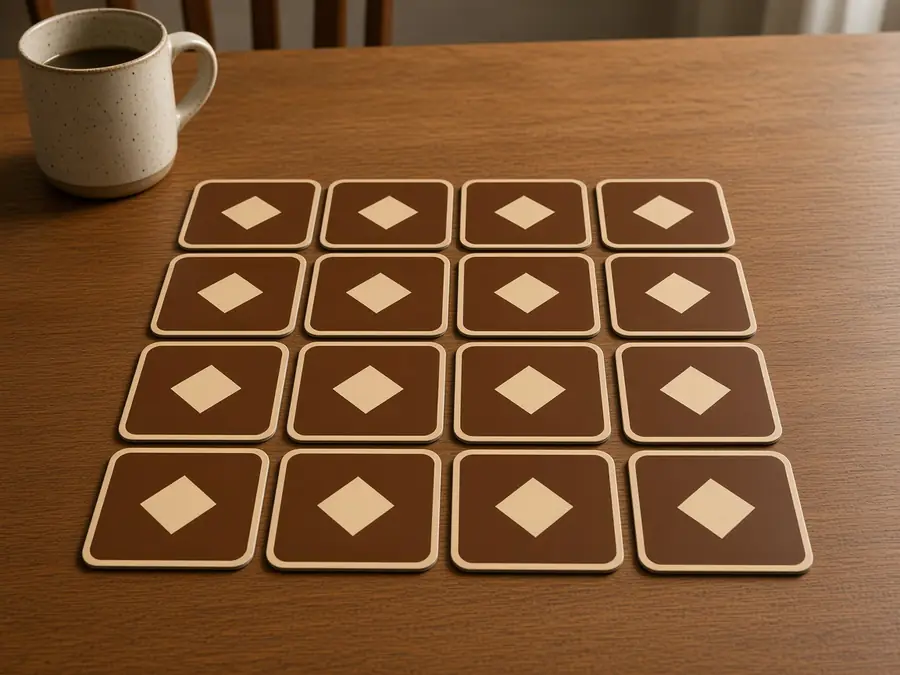
Three grids, three loads
Six pairs is twelve cards in four columns and three rows—enough to learn the click-and-wait rhythm. Eight pairs is the default sixteen-card square, where working memory starts to fill. Twelve pairs is twenty-four cards in six-by-four, and late-game mix-ups get common. Changing difficulty reshuffles immediately. Bests are tracked separately, so you can tell whether extra cards or a new theme is what slowed you down.
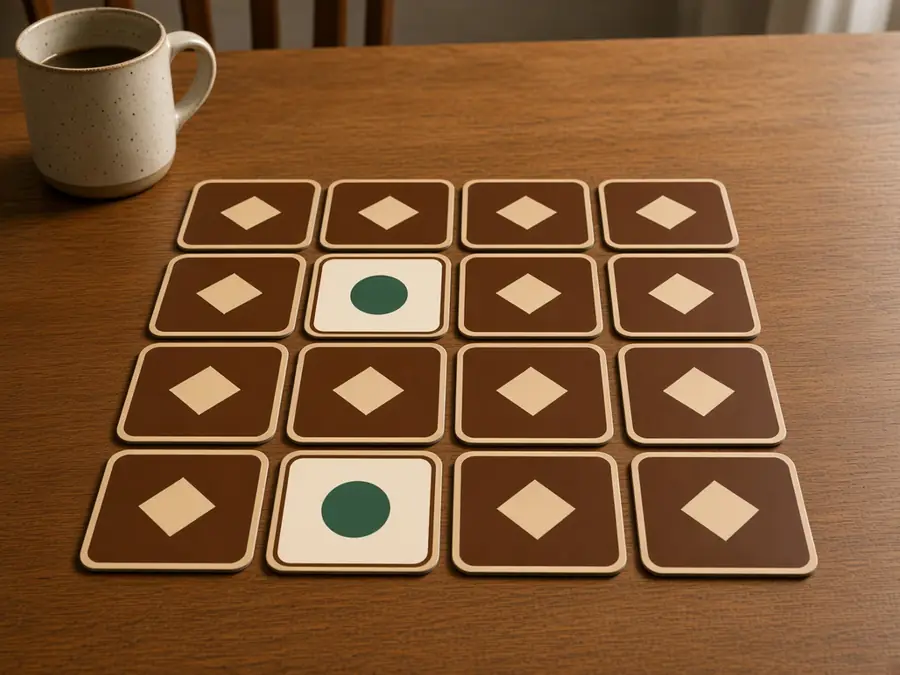
Three skins, same pairing rule
Fruit, animals, and shapes only change the marks on the faces. A pair still has to share the same hidden id—look-alikes do not count. Geometric marks push you toward positions; fruit and animals are easier to name out loud while you bind a coordinate. Switching theme deals a new board and discards the current round.
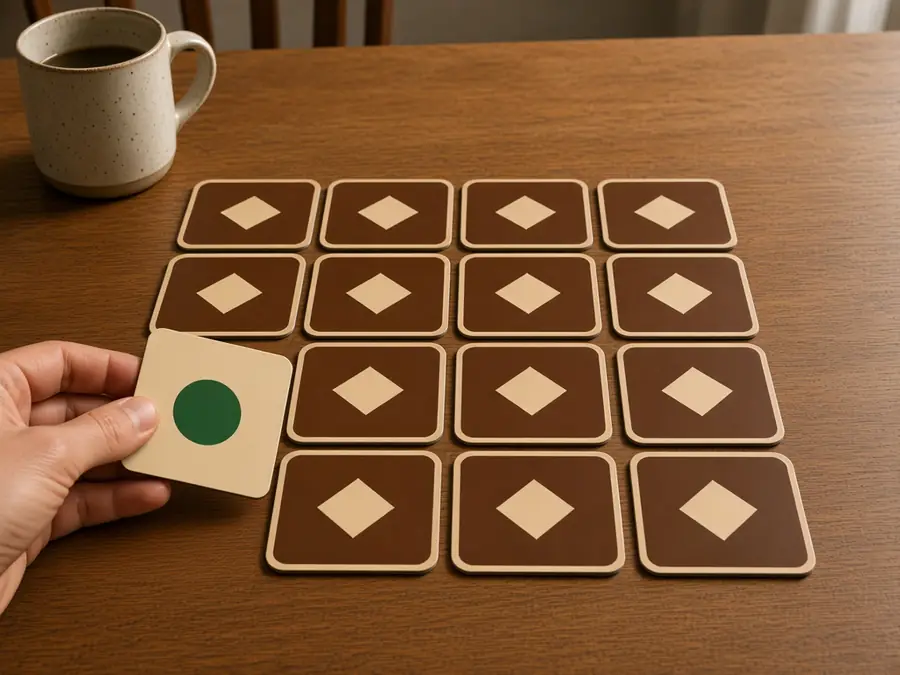
A report of how you remembered
When the last pair lands, the Worker scores efficiency: minimum flips divided by the flips you actually used, scaled into 5–100. It also labels a spatial, pattern, or exploratory style and notes whether errors piled up early, mid-game, or late. The write-up stays in the sidebar and on the overlay. It is practice feedback, not a clinical test.
FAQ
How does a match work, and when is the round over?
Turn two face-down cards. Identical symbols stay face up and add one to the pair count. Different symbols count as one error and flip back after a short hold. The round ends when the pair count equals the level you chose (6, 8, or 12). The clock starts on the first valid flip and stops when the last pair is found.
Is memory match the same as match-3, mahjong solitaire, or Klondike?
No. Match-3 and mahjong solitaire usually need adjacency or a free path to remove tiles. Klondike builds foundations in suit order. Memory match has no path rule: any two cards may pair if the symbols match. The whole puzzle is remembering locations. This site is also single-player; there is no opponent seat.
What does the memory report actually measure?
Most of the score is flip efficiency: the fewest flips possible is twice the number of pairs, divided by how many times you actually turned a card. The report also counts how many matches happened after you had already seen the partner, and it splits errors across the early, middle, and late thirds of the round. Nothing in that write-up leaves your device.
Does Peek count as cheating, and where are scores stored?
Peek is an on-page aid: about two seconds of every face, meant to seed a first map. It does not change how pairing works. Fastest time, fewest flips, and high score are stored separately for 6, 8, and 12 pairs in this browser’s local storage. Another computer, a private window, or clearing site data starts you with empty bests.
Why does a tap sometimes do nothing?
Cards already face up or already matched ignore clicks. During a flip animation or the mismatch hold, input is locked so a third card cannot enter the check. Wait for the faces to settle. That lock is part of the rules, not a freeze.
Do I need an account, an app, or a live opponent?
No signup and no store app. Play in the tab, or add the site to your home screen. Dealing and judging run in a Worker on this device. There is no lobby and no room link. If the page and scripts are already cached, you can often keep practicing the open round offline.
